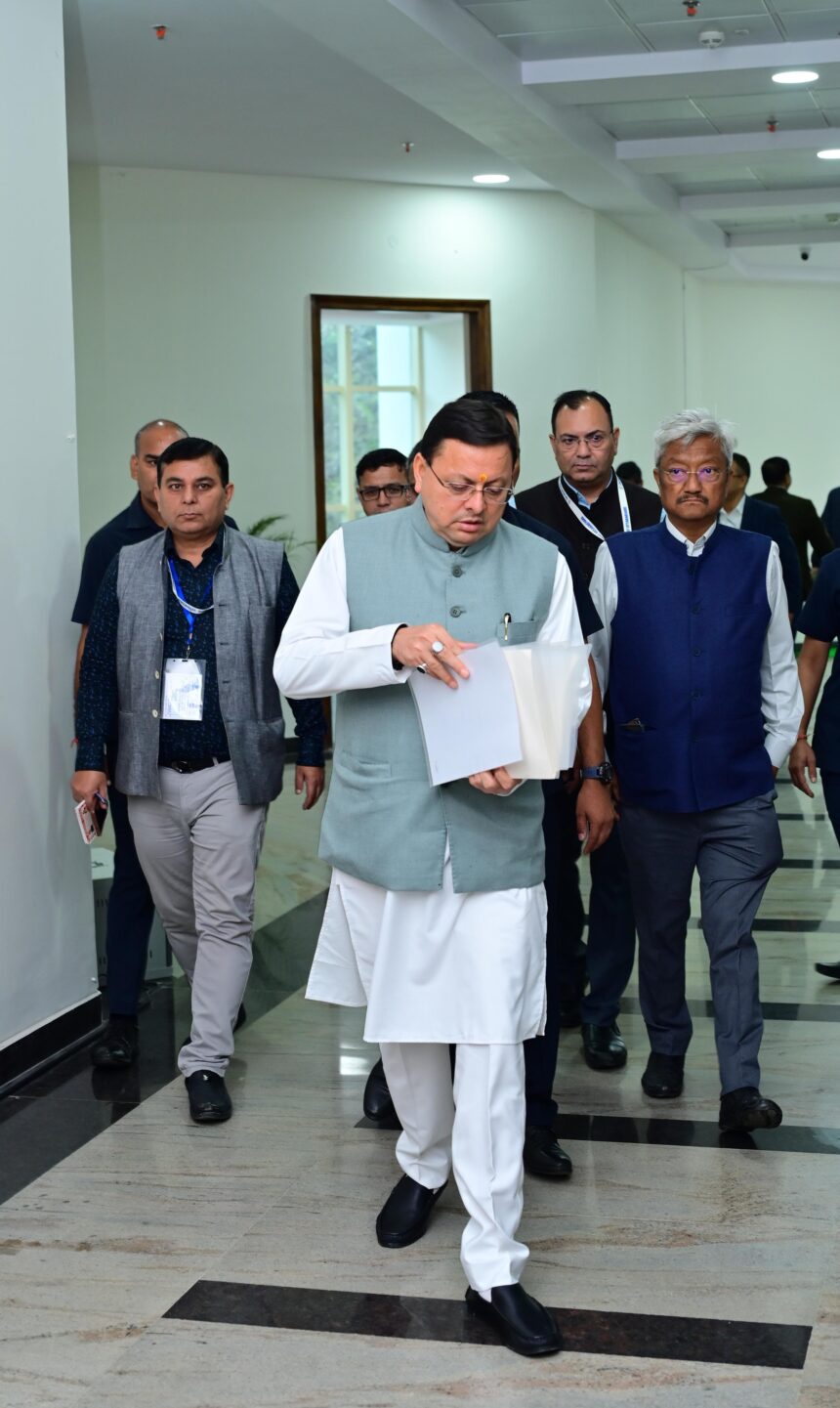

In the Gairsain Assembly today, the Uttarakhand government passed the bill to abolish the Madrasa Board. Despite heavy protests from the opposition, a stringent anti-conversion bill was also approved. While opposition legislators created uproar in the House over law and order, the proposal to pass the anti-conversion bill was presented by Religious Affairs Minister Satpal Maharaj, which was approved by the ruling party using its majority.
The proposal to abolish the Madrasa Board in Uttarakhand from next year was presented by Parliamentary Affairs Minister Subodh Uniyal on behalf of the Chief Minister. The ruling party legislators passed it with a voice vote of “Yes,” while the opposition continued shouting slogans. Along with these, the government also tabled and passed supplementary budgets and other bills one after another.
—
Key Highlights of the Anti-Conversion Amendment Bill
1. Title – The Act will be known as the Uttarakhand Freedom of Religion (Amendment) Act, 2025, and will come into immediate effect.
2. Definition of Allurement (Pralobhan) – The proposed amendment includes:
Offering gifts, gratification, easy money, or material benefits (cash or in-kind).
Employment, free education in schools/colleges run by religious institutions.
Promise of marriage.
Assuring a better lifestyle, invoking divine displeasure, or otherwise.
Depicting any religion’s practices or rituals as harmful compared to another.
Glorifying one religion against another.
3. Digital Means – The amendment expands to include digital platforms:
Social media networking sites and applications that allow creation of public/semi-public profiles, user connections, sharing interests, and influencing users.
Includes emails, instant messaging, and other online tools for promoting or soliciting conversions.
4. Fraudulent Impersonation – Deliberately adopting the attire, social position, or identity of another person, caste, religion, origin, gender, or residency with fraudulent intent.
5. Public Sentiment – Defined as cultural and religious sentiments of a community, which if deliberately hurt, may disturb public order.
6. Victim Definition – Any person harmed due to an offense under this Act, including guardians and legal heirs.
7. Prohibited Acts –
No person shall induce or conspire for religious conversion through any means, including digital.
Concealment of religion for marriage is prohibited.
Fraudulent impersonation, misuse of religious/social identity, or acts causing public hurt for undue advantage are forbidden.
8. Punishments –
Violation: Minimum 3 years to maximum 10 years imprisonment and fine not less than ₹50,000.
If victim is minor, woman, SC/ST, or disabled: Minimum 5 years to 14 years imprisonment and fine not less than ₹1,00,000.
Mass conversion: Minimum 7 years to 14 years imprisonment and fine not less than ₹1,00,000.
Receiving foreign/unauthorized funds for unlawful conversion: 7–14 years imprisonment and fine not less than ₹10,00,000.
Forcing conversion through threat, violence, trafficking, or marriage: Minimum 20 years, extendable to life imprisonment, with additional compensation for victim’s rehabilitation (up to ₹5,00,000).
Repeat offenders: Punishment will be double.
9. Bail and Cognizability –
All offenses will be cognizable and non-bailable, triable by Sessions Court.
Bail may only be granted if the court is satisfied that the accused is not guilty and will not reoffend while on bail.
10. Property Confiscation – District Magistrates can seize properties acquired through offenses under this Act, with provisions for appeals and claims.
11. Victim Rights –
Right to dignity, respect, and fair treatment.
Protection during investigation and trial.
Financial assistance, rehabilitation, relocation support.
Confidentiality of victim’s identity.
12. Government’s Duty –
Ensure effective implementation of the Act.
Provide legal aid, rehabilitation, and socio-economic support to victims.
Conduct periodic surveys for monitoring effectiveness.
—
Key Highlights of the Minority Education Bill
The government has introduced the Uttarakhand Minority Education Bill to establish the Uttarakhand State Authority for Minority Education (USAME).
This authority will grant recognition to educational institutions set up by minority communities, ensure quality, and oversee all related matters.
Provisions:
1. Formation of Authority – USAME will have a Chairperson and 11 members appointed by the state government. The Chairperson must be an educationist from a minority community with at least 15 years of teaching experience.
2. Madrasa Recognition –
All madrasas previously recognized by the Uttarakhand Madrasa Education Board must obtain fresh recognition from USAME to continue religious education from academic session 2026-27.
From July 1, 2026, the Uttarakhand Madrasa Education Board Act, 2016 and the 2019 Madrasa Recognition Regulations will stand repealed.
3. Conditions for Recognition –
Must be established and managed by a minority community.
Must be affiliated with the Council and managed by a registered body (society/trust/company).
Enrollment of non-minority students should not exceed 15%.
4. Curriculum & Exams –
USAME will develop curricula related to religions and languages of minority communities.
It will guide institutions in conducting exams, evaluating students, and issuing certificates.
5. Inclusiveness –
Minority communities included: Sikhs, Christians, Buddhists, Jains, Muslims, and Parsis.
Unlike earlier, where only Muslim madrasas were recognized, now all minority communities’ institutions will be covered.
Children will be connected to mainstream education via the Uttarakhand School Education Council alongside religious instruction.
—
CM Pushkar Singh Dhami’s Statement
“Several important bills have been passed in the Assembly. We have made anti-conversion laws stricter so that forced conversions through allurements, coercion, or love jihad can be prevented.
The second important bill is the Minority Education Bill, which ensures equal educational rights for all communities categorized as minorities. Until now, only the Muslim community had recognition through the Madrasa Board, which will be abolished in 2026. With the creation of the Minority Education Authority, we are moving towards a uniform and transparent education system in Uttarakhand.”